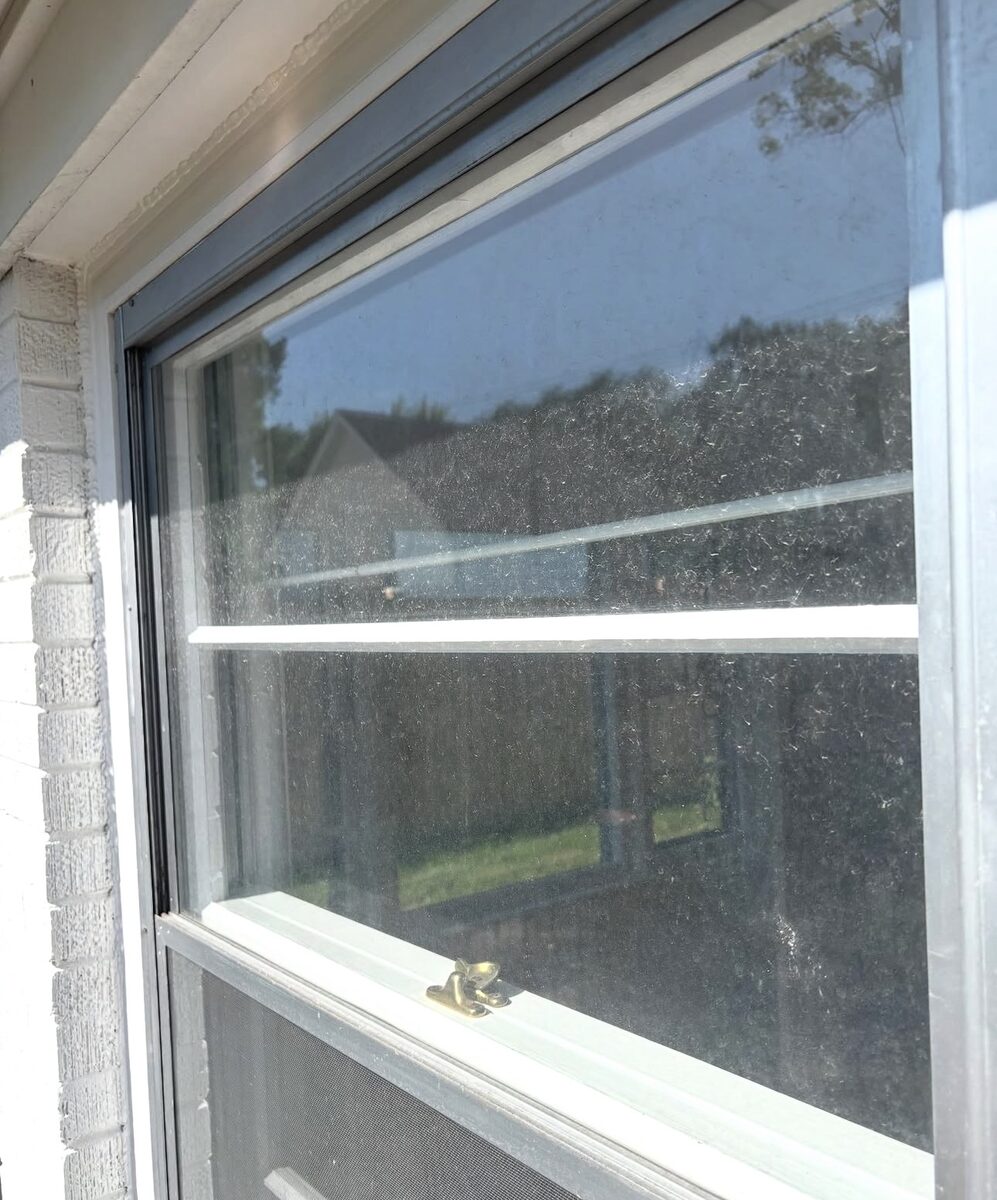
You cleaned your windows, they dried, and there are still cloudy white spots or streaks that won't wipe off. Frustrating — but here's the thing: those aren't dirt. They're mineral deposits left behind by hard water, and they need a different approach than glass cleaner and a paper towel.
Quick fix: For light spots, spray on a 50/50 mix of white vinegar and water, let it soak 10–15 minutes, then scrub gently and rinse. The acetic acid dissolves the minerals without scratching the glass.
What hard water stains actually are
Tap water and sprinkler water carry dissolved minerals — mostly calcium and magnesium. When that water lands on your glass and evaporates, the water leaves but the minerals stay, bonding to the surface as chalky white spots. Let them build up over months and years and they get thick, cloudy, and stubborn.
Removing light-to-moderate stains yourself
- Mix equal parts white distilled vinegar and warm water in a spray bottle.
- Spray the glass generously and let it sit 10–15 minutes — this soak is the important part; it gives the acid time to break the mineral bond.
- Scrub with a non-scratch pad or a soft-bristle brush.
- Rinse with clean water and dry with a squeegee or microfiber cloth.
Lemon juice works too (the citric acid does the same job), and for tougher spots you can add a squirt of dish soap to the vinegar.
For thick, years-old buildup
If vinegar alone won't cut it, make a paste of baking soda and water and gently buff the spots. For severe, baked-on deposits you may need a dedicated calcium/lime/mineral remover. Whatever you use, never take a razor blade to dry glass — it can scratch permanently — and never clean in direct sun, which flash-dries the solution and leaves new residue.
How to stop them coming back
- Aim your sprinklers away from the house. Sprinkler overspray is the #1 cause of hard-water stains on windows in the suburbs.
- Squeegee off water fast. Drying glass before the water evaporates removes the minerals before they can bond.
- Use purified water. This is exactly why our system works so well — purified water has the minerals removed, so it can't leave spots in the first place.
When to just call us
DIY is great for light spots. But if the buildup is thick, spread across a lot of windows, or up on the second story, it's a lot of scrubbing — and the wrong product or a razor can scratch glass you'll have to replace. We handle hard-water restoration across La Grange, Western Springs and Hinsdale as part of a regular clean. Get a free quote and we'll take a look.
Frequently asked questions
Does vinegar remove hard water stains from windows?
Yes, for light to moderate stains. A 50/50 white vinegar and water mix, left to soak 10-15 minutes then scrubbed and rinsed, dissolves most mineral deposits safely.
Why do my windows get cloudy spots even after cleaning?
Those spots are mineral deposits from hard water or sprinkler overspray, not dirt. Regular glass cleaner won't remove them — you need an acid like vinegar, or purified-water cleaning that never leaves minerals behind.
Can hard water permanently damage glass?
If left for years, severe deposits can etch the glass surface. It's best to remove them while fresh and prevent them by keeping sprinklers off the windows.